

Game Model: How belief becomes behaviour
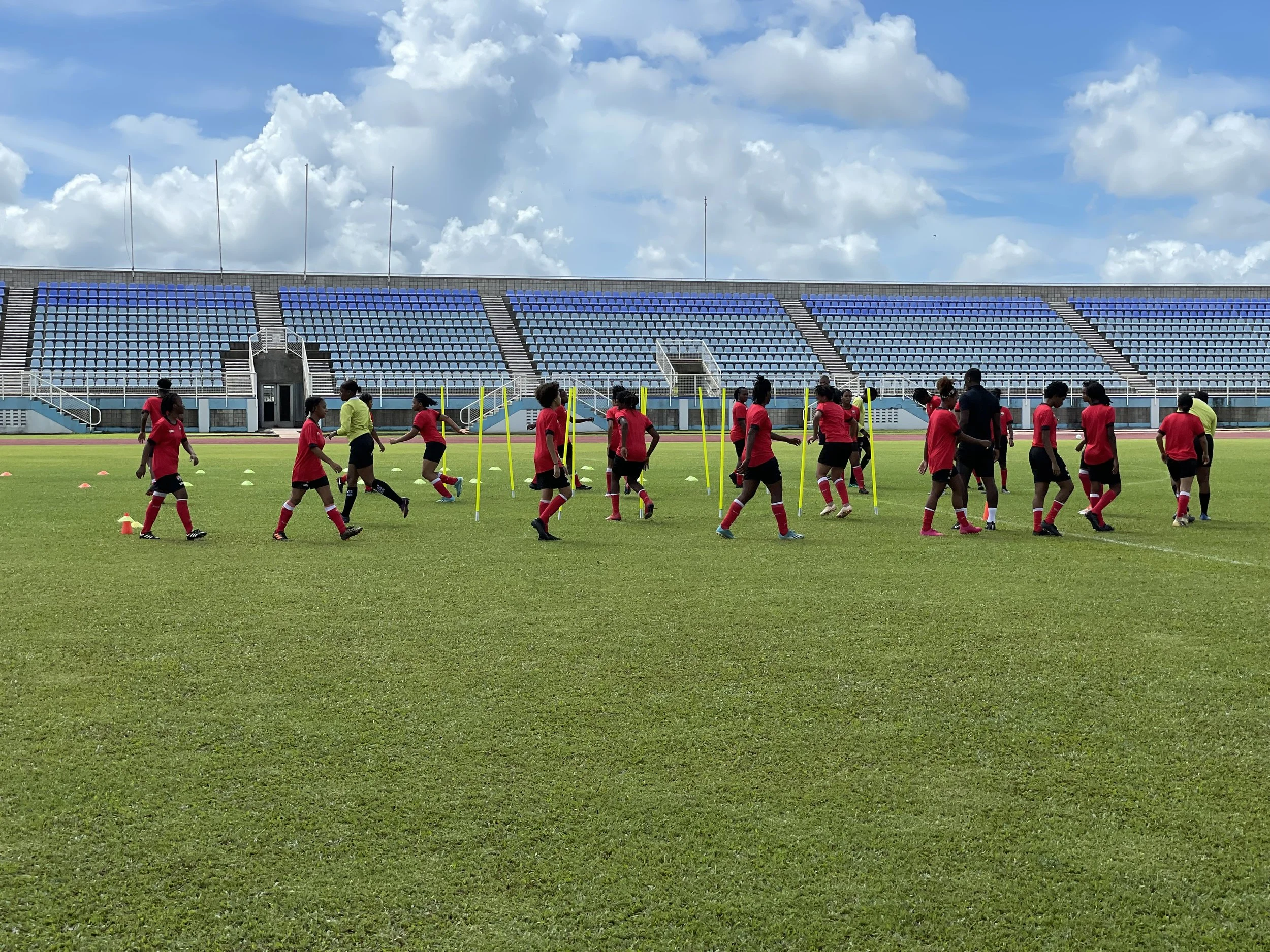
If you watched a team train and play without knowing who the coach was, could you identify them from what you saw? A clearly defined game model means the answer is yes. It's not a formation on a whiteboard — it's a representation of the coach and everything they believe about how football should be played, visible in every phase of the game.
That's where I start with every environment I build. Not with a system, but with a picture — how do I want this team to look, in and out of possession, in transition, under pressure? Once that picture is clear, everything else exists to serve it.
From Belief to Training Week
A game model only matters if it's lived, not just described. Once you know how you want your team to play, the job becomes making sure your training week reproduces that reality every single day.
If the belief is progressive, fast-paced possession, that can't just be a matchday instruction — it has to be the standard in every rondo, every possession drill, every small-sided game, every phase of play practice, all week. Every time a player has the ball at their feet in training, the same message and the same expectation needs to be there, reinforced and recreated. Players don't develop a habit from being told about it on a Saturday. They develop it from living it every Tuesday.
Analysis: The Proof, Not the Opinion
This is where most environments quietly fail — they believe they're delivering the model, but nobody's actually checking.
I watch every training session back. Not to critique for the sake of it, but to answer one question honestly: are we, as a staff, delivering information and practices that genuinely reflect what we say we believe? And are the players — individually and collectively — executing the roles and responsibilities that sit underneath that belief?
Analysis isn't there to confirm what you already think happened. It's there to tell you the truth, whether that truth is comfortable or not. If the model says one thing and the footage says another, the footage wins. That gap — between the model you've described and the training you've actually delivered — is where the real coaching work happens.
Physical Capability: The Engine Behind the Belief
None of this works without the physical capacity to deliver it. As a coach with decades of experience within Womens football, I have seen first hand the development of the game from a physical performance perspective. The game today is unrecognisable physically from the game I first started working in during the early 2000’s. And season by season - its still getting better and better in all physical metrics at at the top levels of the game, these players are super athletes!
When building my game model, it is my preference on how we play, but I need to also understand and comply with the fact that I need to ensure we prepare our players for the demands of the game and not just the demands of our game model. I put a large focus on creating programs where the physical element of the game underpins EVERYTHING we do.
If your game model demands explosive, aggressive play in and out of possession, you need players who can produce that output — not once, but repeatedly, for ninety minutes, week after week.
This is where I'll say something that might be unpopular:
Physical data in isolation means nothing.
Too many self-declared experts pick a number and hold players accountable to hitting it, in training or in matches, without ever asking whether that number actually means anything in context. Physical data is a genuinely vital tool for coaches — but only when it's used properly, not treated as a scoreboard on its own.
To mean anything, physical data has to be read against three things:
The game model itself. A high-pressing team will — and should — produce bigger distance and high-speed running numbers than a team that sits in a mid or low block. Judging both against the same benchmark is meaningless.
Positional context. What a number means for a wide player sprinting in behind is not what it means for a central defender managing distances differently. Physical demands are role-specific, not universal.
The environment around the game. Who were the opponents, and what's their model? What was the weather — extreme heat alone can significantly affect physical output regardless of intent or fitness. Did we manage the game tactically in the closing stages to protect a result, naturally lowering physical output because the football demanded it, not because anything was wrong?
Strip away that context and a number is just a number. Put it back in context, and it tells you exactly whether your team has the physical foundation to actually live the model you've built — or whether that's the next thing to work on.
I have been fortunate to work with some of the very best Physical Performance coaches in the game, who have worked at National Team levels, and within the American NWSL and the English WSL (arguably the most physically demanding Womens leagues in the WORLD) and the common thread they all had as Performance staff - they prepared players to ensure they have the physical capabilities to compete at the top levels, and were able to accomplish this whilst also understanding and recognising the context - THE GAME THE PLAYERS ARE ACTUALLY PLAYING!
Physical data: vital. Without football context: pointless.
Recruitment: Building Toward the Model, Not Away From It
The same thinking has to run through recruitment. When you're assessing a potential player, the question isn't simply "is this a good player" — it's whether they can repeatedly produce the technical, tactical, and physical attributes your model actually requires, in their specific position.
What are the position-specific attributes non-negotiable to the way you play? And if a player doesn't tick every one of those boxes, does what they bring elsewhere compensate — something distinctive the squad doesn't already have? Recruitment built around a genuine model asks sharper questions than recruitment built around simply collecting talent.
The Full Picture
A game model isn't a diagram. It's a belief system that has to survive contact with a Tuesday training session, a piece of match footage, a GPS report, and a recruitment decision — and still look like the same thing every time.
Get that consistency right, and anyone watching your team should be able to tell exactly who's coaching them, without needing to be told.
BETTER • EVERY • DAY
James Thomas is Head Coach at Peyia Akamas Ladies FC in the Cyprus Women's League and a regular contributor to Elite Soccer Coaching and various coaching platforms. Read more at jamesthomas.coach.