

Session Design: Working backwards to the desired outcome
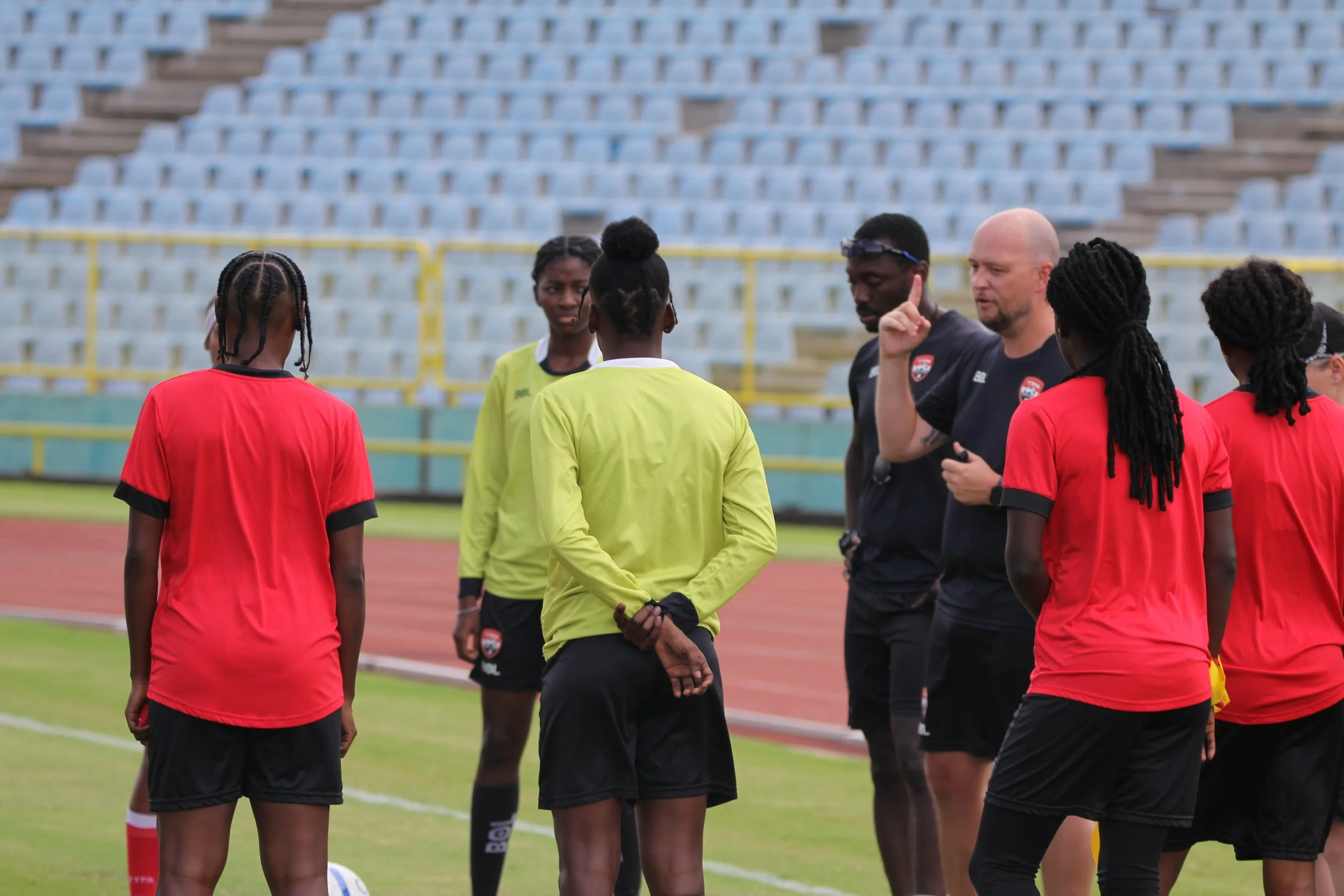
Design Backwards. Coach Forwards.
One of the most common challenges coaches face is designing sessions that genuinely transfer to match performance. Too often, sessions are built around drills rather than outcomes — players improve in isolated practices, but that improvement doesn't consistently show up on the pitch.
The most effective coaches flip this process. They start with the end in mind and work backwards, aligning every part of the session to a clear objective that links directly to game day performance. This is the approach I use in every environment I build — and it's the foundation of BETTER•EVERY•DAY in practice. Purposeful, connected, and designed to transfer.
Step 1 — Define the Desired Outcome
Before planning anything, ask yourself: what do I want to see in the game that I'm not currently seeing enough of?
This could be breaking lines through midfield, pressing aggressively in the final third, creating overloads in wide areas, or being more clinical in transition.
Be specific. Avoid vague goals like "improve possession." Instead, define it clearly — "play forward within three passes after regaining possession" or "win the ball back within six seconds in the attacking third." The clearer the outcome, the sharper your session design will be.
Step 2 — Identify the Game Moments
Football is made up of moments — in possession, out of possession, and transition in both directions. Your desired outcome will sit within one or more of these.
If your outcome is high pressing, for example, you're working in the out-of-possession moment and the attack-to-defence transition. This step grounds your session in the reality of the game rather than an abstract idea.
Step 3 — Break Down the Behaviours
Now ask: what do my players need to do, specifically, to achieve this outcome? These are your key behaviours.
For high pressing, that might mean sprinting to press immediately on loss of possession, angling runs to force play one way, staying compact between units, and recognising triggers like a bad touch, a back pass, or sideline pressure. These behaviours become your coaching points.
Step 4 — Identify the Individual Elements
Go deeper. What individual qualities are required to execute these behaviours?
Technical — tackling technique, first touch under pressure, passing speed and accuracy
Tactical — positioning relative to teammates, understanding pressing triggers, reading the game
Physical — acceleration and repeat sprint ability, agility and reaction speed
Psychological — intensity, decision-making under pressure, communication
This step ensures your session targets the real reasons performance may be lacking.
Step 5 — Build the Session, From Simple to Complex
Design the session to progressively build toward the outcome:
1. Activation / Warm-Up — link it to the theme immediately. For pressing, this might mean reaction-based pressing games and short, sharp sprint actions.
2. Skill Practice (Unopposed) — focus on technique and clarity. Rehearse pressing angles in small groups and walk through trigger recognition without full opposition.
3. Increasing Pressure — add opposition and realism while keeping the focus on key behaviours. A 4v4 plus targets with pressing conditions, or a small-sided game where pressing earns bonus points, works well here.
4. Game-Based Practice — replicate match conditions and let players make real decisions. An 8v8 or 11v11 with constraints — for example, a goal counts double if won within six seconds of pressing — reveals whether the learning is transferring.
5. Free Play — remove the constraints, let the game flow, and assess whether the behaviours appear naturally.
Step 6 — Coach the Details
During the session, your role is to reinforce the link between outcome, behaviour, and action. Stop and show good examples. Ask questions — "what triggered that press?" Repeat key moments. Keep your messages simple and consistent.
Avoid over-coaching. Focus only on what directly impacts the outcome.
Step 7 — Review and Reflect
After the session, ask whether it linked clearly to the outcome, whether players demonstrated the desired behaviours, and whether it transferred into game-like situations. Then refine — what needs more work, and what can be progressed next session?
Great coaching is a constant cycle: plan, deliver, reflect, adapt.
Key Principles to Remember
Start with the game, not the drill
Be specific with your outcomes
Align every activity to your objective
Progress from simple to complex to game-realistic
Focus on behaviours, not just actions
Final Thought
The best sessions are not the most creative or complex — they are the most purposeful.
When you design from the outcome backwards, every minute on the pitch has intent. Your players understand the why, and that's when real learning and performance improvement happens.
Stay consistent with this approach, and you won't just run sessions — you'll build a clear game model your players can execute under pressure.
BETTER • EVERY • DAY
About James Thomas
James Thomas is an elite women’s football coach and high-performance leader with experience across international football, professional academies and national talent development programmes. James is a regular guest on coaching and leadership podcasts, as well as a guest expert on Elite Soccer Coaching. For more information visit : JamesThomas.coach